You could walk through a world-class garden and still miss the best parts. That’s why on a Carex trip, you travel with an expert who adds the horticultural context and guides your eye to what’s truly worth seeing.

Chris Walsh
Read moreShow less(opens in a new tab)
Chris Walsh
For Chris, gardens have always been about more than plants. They are places where people live, entertain, remember, escape, and connect with the landscape around them. That belief has shaped a career spanning more than 25 years in landscape design, installation, and horticultural care, and, more recently, has taken Chris around the world as a garden tour guide.
Today, Chris is the founder of Verdant Gardenworks, a landscape design and horticultural care company based in Southwest Michigan. But his path to professional garden-making began much earlier, on a five-acre family property outside Washington, D.C., called Twin Oaks.
Where did your interest in gardening begin?
My father tended a large vegetable garden at our home in Oakton, Virginia. Gardening was his stress relief, so I grew up understanding that a garden could serve a purpose beyond simply looking beautiful.
We had five acres, which meant there was always something to mow, weed, plant, or haul around on a tractor. I was also responsible for planting the annual hanging baskets around our swimming pool. At the time, I probably viewed some of that more as work than horticultural education!
The real turning point came while I was in college. My maternal grandmother, Erma, passed away, and my mother asked me to design and help build a memorial garden for her at Twin Oaks.
I had previously worked alongside a landscape architect who was helping my parents redesign the patios and pool area, so I had begun to understand that landscapes could actually be designed. Creating that memorial garden brought those ideas together. My grandmother and my parents provided the encouragement that ultimately led me toward landscape design.
How did you turn that interest into a career?
I attended the College of William & Mary, where I also worked part-time for Facilities Management under the college’s landscape architect, John McFarlane.
That experience taught me a tremendous amount about how landscapes change through the seasons. I began to understand the value of a mixed perennial border, the importance of structure, and how rotating annual displays could keep a landscape interesting throughout the year.
After William & Mary, I continued studying landscape design through a professional program at George Washington University in Washington, D.C. That program ultimately provided one of the most important connections of my career: Carolyn Mullet, founder of Carex Tours.
My first professional landscape-design job was assisting Carolyn at her Washington-area design-build firm. It’s rather wonderful that, all these years later, we’ve come full circle and I’m now guiding garden tours for Carex.
Where did your career take you from there?
After working in Washington, I moved to Chicago. I worked for a retail garden center, then a design-build garden center, and later a Christmas décor company before joining Topiarius, where I expanded the company’s seasonal décor and horticultural maintenance programs.
Over the years, I’ve been fortunate to work on award-winning landscape design and maintenance projects, and I spent 12 years designing and building trade-show gardens for the Illinois Landscape Contractors Association.
But I’ve really been working in landscapes since I was a teenager. I operated a mowing company for about six years through high school and college, and I’ve been professionally designing, installing, and maintaining landscapes since 2000.
That combination matters to me. I’m not interested only in how a garden looks on the day it is photographed. I’m fascinated by what happens five, ten, or twenty years later: how plants compete, how spaces mature, and how thoughtful horticultural care can either reinforce or gradually erase the original design intent.
You’ve also worked on landscapes far beyond the United States.
One of the most meaningful projects of my career was volunteering for five years with the Agahozo-Shalom Youth Village in Rwanda, beginning with the project’s inception.
ASYV is a residential and educational community created for vulnerable young people. I helped with landscape planning across its 154-acre campus, including stormwater management, developing the shade-tree planting strategy, and designing ornamental gardens for ceremonial areas and student housing.
It was an extraordinary opportunity to think about landscape on a completely different scale and in a very different cultural and environmental setting.
Today, Verdant Gardenworks also has a private residential garden project underway in County Wicklow, Ireland.
Ireland has been part of your garden story for a long time, hasn’t it?
Yes. I lived in Dublin for about nine months while I was in college and traveled extensively throughout Ireland visiting gardens.
One particularly memorable experience was meeting Helen Dillon in her Dublin garden. I was a college student visiting gardens in the 1990s, and suddenly here was this remarkable plantswoman and designer in the garden she had created.
Looking back, I think that experience helped start my fascination not just with gardens, but with the people behind gardens. Who imagined this place? Why did they make these choices? What were they responding to? Those are still the questions that fascinate me today.
What led you to start Verdant Gardenworks?
While working in Chicago, I increasingly began caring for properties in Southwest Michigan, particularly gardens belonging to people who used their Michigan homes as retreats.
I loved those properties and the relationships I’d developed with the clients, but I also wanted a career that would allow me to balance professional garden-making with travel and garden tour guiding.
Starting Verdant Gardenworks gave me the opportunity to do both.
Verdant allows me to continue designing, installing, and caring for gardens that I love while also leaving periodically to explore gardens around the world with Carex guests. The two sides of my career constantly inform one another. I bring things I learn while traveling back to my design work, and my experience actually building and maintaining gardens changes what I notice when I’m traveling.
Tell us about your own garden.
My husband and I started with essentially a blank slate at our half-acre property in Southwest Michigan in 2016.
I think of the garden as a series of outdoor rooms rather than one landscape. There’s an outdoor living and dining room, a grilling and kitchen area, a more private hot-tub garden, a vegetable garden, a fire-pit area, and the more practical utility portions of the property.
We began with the hardscape and the architecture of the garden, including the pergola, and then established the structural and privacy plantings. From there, the planting has continued to evolve.
My own planting style gravitates toward bold, romantic masses of perennials. I want abundance and emotion, but I also want structure underneath it.
The front garden and containers become something of a laboratory for Verdant. We rotate seasonal displays both because I enjoy them and because they allow us to experiment and demonstrate what we can create for our clients.
And, like most designers’ gardens, it is never actually finished.
How did you become a guide for Carex Tours?
I had traveled with Carolyn Mullet on Carex tours in the United Kingdom and the Netherlands and had also traveled extensively throughout Europe exploring gardens independently.
Then, in 2022, Carolyn became ill shortly before a tour to Japan. She asked whether I could combine my professional landscape experience, my familiarity with Carex tours, and my experience being on stage and speaking to groups, and lead the tour.
So my first trip to Japan was also my first trip as a Carex guide.
There are probably less intimidating ways to begin tour guiding than taking a group of passionate garden enthusiasts halfway around the world to explore one of the world’s oldest and most sophisticated gardening traditions, but I loved it.
Since then, garden travel has become an increasingly important part of how I understand landscape design.
Has one country particularly changed the way you see gardens?
Japan profoundly changed my perspective.
Japanese garden-making draws upon traditions developed over many centuries, and experiencing those landscapes forces you to reconsider what we mean by “design.” The manipulation of topography, water, stone, vegetation, views, and borrowed scenery can be incredibly subtle.
What affected me most was the reverence for nature and the idea that horticultural maintenance itself can be a form of design.
We sometimes think of maintenance as what happens after a garden has been designed. Japan helped reinforce for me that skilled pruning, training, editing, and stewardship are actually part of the continuing creative process.
That has influenced both the way I design and the way we care for gardens at Verdant.
Do you have favorite gardens?
In England, Gravetye Manor is probably my favorite.
It is inseparable from the legacy of William Robinson and his ideas about naturalistic gardening, but what particularly interests me today is the work of head gardener Tom Coward and his team. They respect Robinson’s philosophy without treating the garden as a museum. It continues to evolve.
That’s what great stewardship should do: understand the original intent while allowing a living garden to remain alive.
In the Netherlands, Vlinderhof in Utrecht is another favorite. Piet Oudolf’s planting demonstrates beautifully how structure, repetition, texture, and the complete life cycle of a perennial can create a garden that remains compelling well beyond peak flower.
And Japan is almost in a category of its own. It fundamentally changed how I think about the relationship between garden-making and nature.
What advice would you give someone starting their own garden?
Before you start buying plants, figure out how you want to use the space.
When I meet a new client, I ask how they imagine themselves in their garden. Are they entertaining twenty people? Having coffee alone in the morning? Cooking outside? Strolling? Gardening intensively? Sitting by a fire with friends?
Those activities begin to define the garden rooms. Once we understand the rooms, we can start creating their mood, structure, and planting character.
For someone learning to garden, I also recommend visiting local arboretums, botanic gardens, and especially local garden tours. Look at what is thriving where you live.
And don’t just notice what’s beautiful. Ask what it takes to keep it beautiful.
A plant that looks spectacular for two weeks but requires constant intervention is a very different proposition from one that contributes to the garden throughout the year. Understanding that distinction makes you a much better gardener.
Why is traveling to see gardens in person still important when we have access to so many photographs and books?
Because until you actually walk through a garden, you can’t fully understand the emotion the designer was trying to evoke.
Photographs are wonderful. Plans help us understand structure. Books give us history and context. But gardens are spatial experiences.
You have to walk the path, experience something being concealed and then revealed, feel the compression of a narrow passage before entering an open space, hear water before you see it, notice how a borrowed view suddenly becomes part of the composition, or understand why someone placed a bench in one very particular spot.
A great garden unfolds over time.
That’s why seeing these places in person can be such an emotional and evocative experience.
What do you hope guests take away from traveling with you?
Of course I hope they have a wonderful trip, and that they meet fellow travelers with whom they’ll want to explore more gardens around the world.
But I also hope they come home seeing gardens differently.
Many of the gardens we visit represent ideas that eventually influenced generations of American landscape architects, garden designers, and horticulturists. When we travel through England, the Netherlands, Ireland, Italy, or Japan, we’re not simply looking at beautiful gardens. We’re learning the vocabulary and tracing the lineage of ideas that continue to shape landscapes today.
My goal is to help guests recognize those connections.
Maybe months or years after one of our tours, they’ll be walking through a botanic garden, a memorial, a public landscape, or simply standing in their own backyard, and suddenly recognize an idea they’ve encountered before.
They’ll understand why a space feels the way it does.
For me, that’s one of the great rewards of garden travel. Once you’ve learned to really see a garden, you never quite look at one the same way again.
Kim Woods Rabbidge
Read moreShow less(opens in a new tab)
Kim Woods Rabbidge
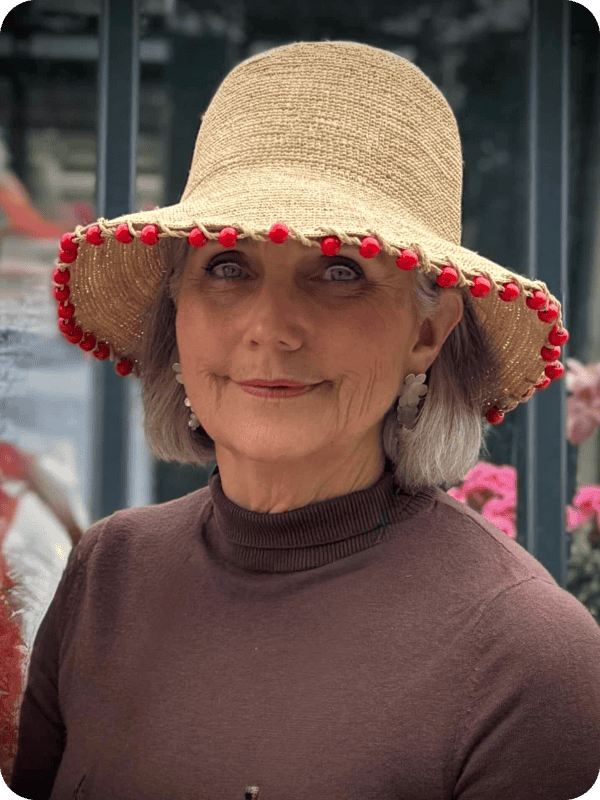
When you first meet Kim, you notice her warmth and enthusiasm right away. She sees gardens not just as places filled with plants, but as living works of art, and as a window into the place you’re visiting.
Kim grew up in the New England region of New South Wales, Australia, where her father, a farmer and conservationist, taught her to love the small wonders of the bush. After a career as an art director designing magazines and books, she became the Queensland coordinator for Australia’s Open Garden Scheme. Her eye for design and a good photograph led her into garden writing and photography, and she has been sharing beautiful gardens with others ever since. Today, Kim and her husband, Michael, are turning an old farm in the Northern Rivers into a 2.5-acre garden, planting trees for future generations to enjoy. She has been leading garden trips at home and overseas for many years, and in May 2027 she will guide our Chelsea Flower Show & Great English Gardens trip.
How did your love for gardens first begin?
I grew up in Australia’s New England Region in New South Wales on the east coast, a beautiful part of the country.
My father, a farmer and conservationist, taught me how to appreciate mosses and lichens, exquisite bush orchids that smelled like chocolate or looked like swans, and different wattles, aka acacia, flowering throughout the year. So my appreciation of nature started when I was a little girl, and evolved into designed landscapes over the years. My mother was creative, and our home was a sanctuary.
Walk us through your gardening journey so far.
After studying at Sydney College of the Arts, I became an art director at Australian Consolidated Press, designing magazines and books. When we moved to the country, I painted and taught art, then later I became Queensland coordinator for Australia’s Open Garden Scheme, a nationwide program opening private gardens to the public.
As coordinator, I needed to promote the gardens opening, so the owners, who’d put in so much effort, had the maximum number of visitors. My photos, in conjunction with the articles I wrote, helped with publicity. Since then, I’ve written about, and photographed, gardens for several publications and books. I’m often asked for garden consultations; however, if it’s a major project, I refer to my son Laughlan, a landscape architect who designs and constructs through his business, Land Company.
My Instagram, Our Australian Gardens, mainly covers designed and natural landscapes at home, but when I travel overseas, I share there too.
Is there a particular type of garden, plant, or era that holds a special place in your heart?
Gosh, no. I easily come under the spell of so many gardens. I’ve often replied when asked about my favorites, “It’s those whose owners are most enthusiastic.” It doesn’t matter if it’s professionally designed and maintained, or the handiwork of homespun gardeners. Being in a garden whose owner adores it is pure joy.
If you could wander any garden in the world tomorrow, where would you go and why?
There are so many extraordinary gardens in the States! I had two amazing weeks a couple of years ago with my friend Karl Gercens from Longwood Gardens, who hosted me in the Mid-Atlantic USA. Amazing, and that was just a pocketful. Across in Italy, the romantic garden Ninfa is definitely on my must-see gardens list.
Luckily, when I’m home, I get to wander daily through our own young garden. I’m filled with wonder, I tweak a mental to-do list, and I’m eternally excited in anticipation of it maturing each season.
What’s the one plant you’d never be without?
Much too hard! Fruit, vegetables, trees, shrubs, flowers, grasses…
What can’t you travel without?
My phone. It’s so good to be able to post images of gardens visited, then relive each awesome experience.
Finish this sentence: People are always surprised to learn that I…
…one of my missions is to encourage native snobs to love exotics, and exotic snobs to love natives. Plants aren’t snobs. If they’re growing well and not invasive, and if you’re happy where they’re growing, they’re in the right place.
What are you most looking forward to sharing with our guests on the trip?
I like to help our travelers maximize the pleasure of walking through a garden by pausing, looking up, and looking back. Each garden will have influences from different eras; some are subtle, some are bold. At the end of the day, it’s good to share our thoughts on the places we’ve visited. For home gardeners, I’m happy to help with growing advice when I can, and encourage those amongst us to share theirs too.
If you could give one piece of advice to a gardening newbie, what would it be?
Walk around your neighborhood, take photos, identify what’s growing well, research it, and ask local gardeners for advice. Lots of people are very, very good gardeners with great knowledge, but not necessarily about your area. Local advice is priceless.
Is there a gardening myth you’d love to bust?
Buff is a beautiful color, and if lawns are not green, that’s perfectly OK.
What do you think makes visiting gardens abroad so special?
Dreaming is part of the pleasure of travel. We imagine living in the garden we’re visiting; we’re transported into another time and place. We learn so much about the heritage or, if it’s a contemporary landscape, about its spirit. It’s like being immersed into the culture, but under an open sky.
Is there anything else you’d like to share about yourself?
I love visiting gardens because we always find beauty. Beauty inspires contentment.
Kitty Wiegert
Read moreShow less
Kitty Wiegert
Read moreShow less
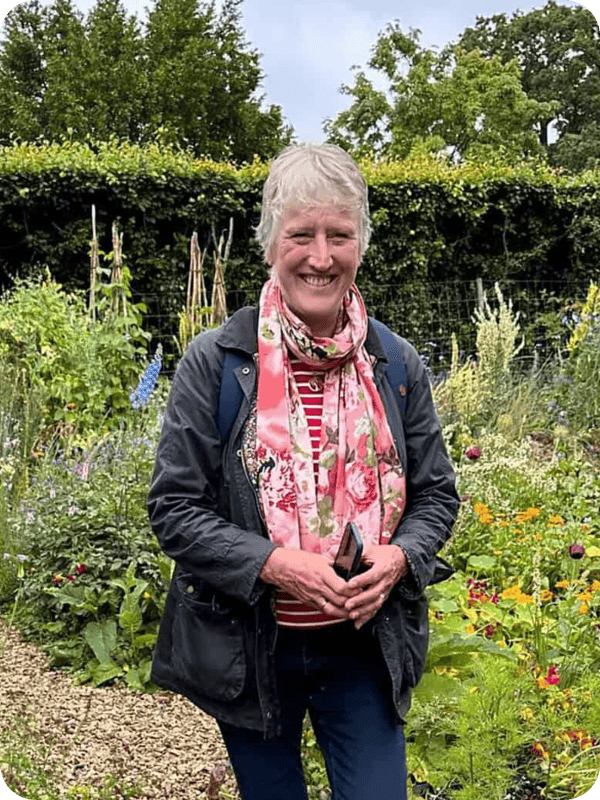
Kitty’s love of gardens grew from her father’s vegetable plot in the Netherlands. When she and her family moved into their own home with a garden in the 1980s, she took a course in garden design and set off on garden trips to Great Britain to learn even more about plants.
She joined the Dutch Royal Horticultural Society in 1990 and spent 20 years serving on its boards at the local, regional, and national level. In 2004, she began leading garden tours, which have since taken her to gardens all around Europe and as far as New Zealand and Australia. Along the way, Kitty loves sharing not just the plants, but the history and culture behind every garden.
How did your love for gardens first begin?
My father was a keen gardener, providing us with vegetables from his own gardening plot. In the eighties, when we moved to our own house with a garden, I took a course in garden design. To enhance my plant knowledge, I joined several garden tours to Great Britain.
Because of my interest in gardening, I became a member of the Dutch Royal Horticultural Society in 1990. For 20 years, I’ve been a board member on a local, regional, and national level. Out of interest, I started as a tour manager for Garden Tours in 2004. This gave me the opportunity to visit gardens all around Europe. New Zealand and Australia were the destination of a garden cruise in 2018-2019.
Is there a particular type of garden, plant, or era that holds a special place in your heart?
The evolution of gardening from the Arts and Crafts period to the current Dutch Wave and naturalistic planting is fascinating. It is very interesting to witness the gradual changes in gardening styles.
If you could wander any garden in the world tomorrow, where would you go and why?
I would like to visit the High Line in New York and other gardening projects by Piet Oudolf. Next to that, revisiting Jimi Blake’s Hunting Brook Gardens during different seasons. Tresco Abbey Garden on the Isles of Scilly is worth several visits.
What’s the one plant you’d never be without?
Depending on the season: Galanthus (snowdrops) in February, Aquilegia in spring, and brightly colored Montbretia and Kniphofia in autumn.
What can’t you travel without?
Comfortable travel and lodging and a motivated group of gardeners.
Finish this sentence: People are always surprised to learn that I…
…next to information on gardening, love to share cultural and historical stories with my guests.
If you could give one piece of advice to a gardening newbie, what would it be?
Try to find a gardening style that appeals to you, which fits the circumstances, like soil and climate, in your garden.
Is there a gardening myth you’d love to bust?
There are no “maintenance-free” gardens.
What do you think makes visiting gardens abroad so special?
Getting to know plants from other climate zones and learning from the experience of garden owners abroad.
Is there anything else you’d like to share about yourself?
To boldly go and visit gardens you can’t live without.